
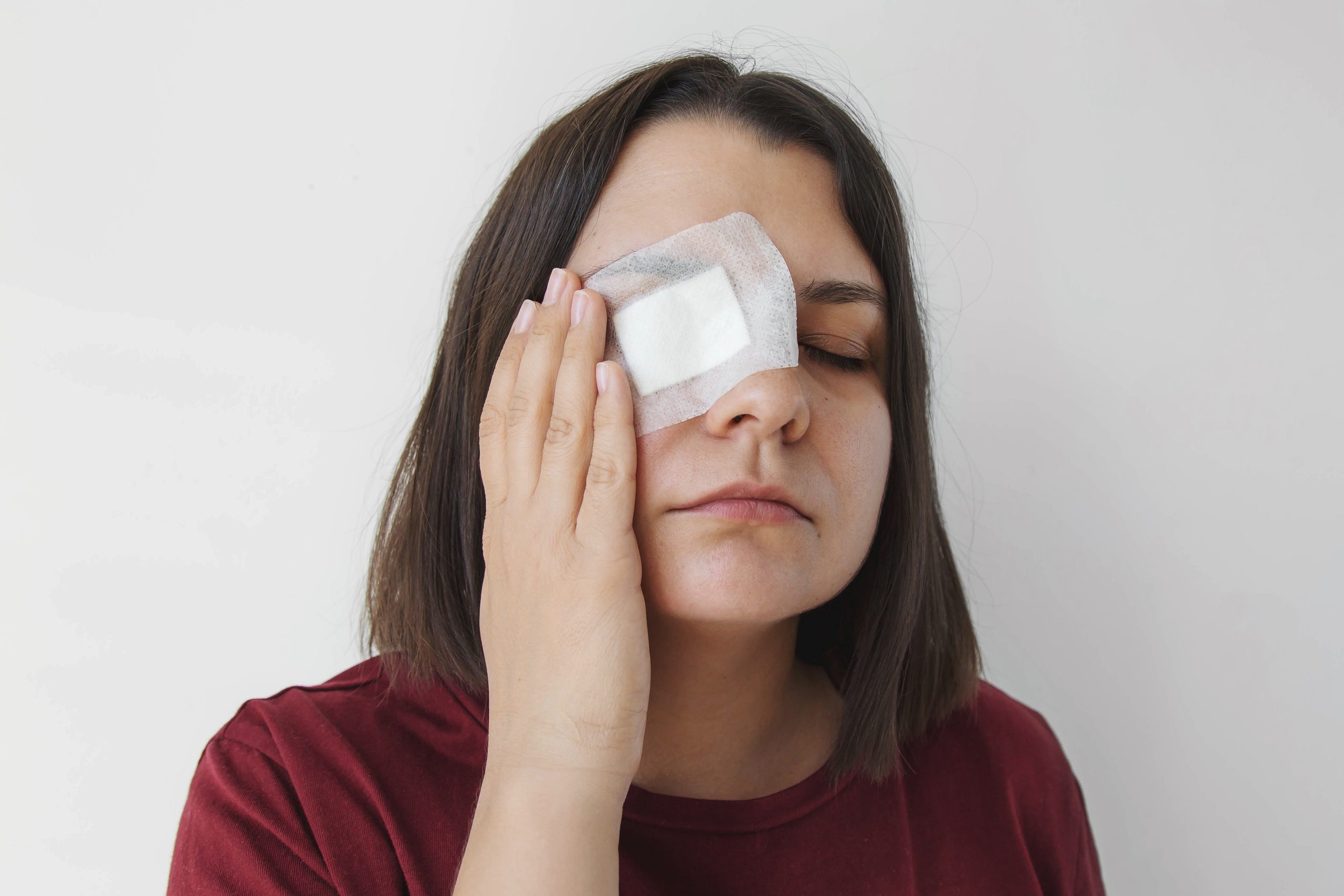
The most common signs of an orbital blowout fracture include double vision, swelling and bruising around the eye, a sunken or unusual eye position, numbness in the cheek or upper lip, and trouble moving the eye up or down. These symptoms usually appear after blunt force trauma to the face or eye area – a sports collision, a fall, a car accident, or being struck by a fist or object.
Dr. Viraj Mehta, a double board-certified oculofacial plastic and reconstructive surgeon, specializes in the complex anatomy of the eye socket and surrounding facial structures, including traumatic injuries to the orbit.
The eye sits inside a cone-shaped bony cup called the orbit, or eye socket. This socket is built from seven facial bones that fit together like a puzzle and protect the eye on every side. While the outer rim is fairly strong, the floor of the orbit and the inner (medial) wall – next to the nose – are extremely thin, in some places only as thick as a sheet of paper or as fragile as a potato chip.
When a blunt object larger than the eye opening – a baseball, an airbag, an elbow, or a fist – strikes the eye, the sudden spike in pressure pushes the eye backward. Because the contents of the orbit are non-compressible, this creates a hydraulic effect that cracks the thin floor or inner wall while the rim stays intact – which is why it is called a “blowout.” The bone gives way into the maxillary sinus (below the eye) or the ethmoid sinus (next to the nose).
This event can have several immediate consequences:
Herniation: Fat and sometimes the small muscles that move the eye can slip through the fracture into the sinus below.
Entrapment: A muscle can become trapped within the fractured bone fragments, restricting eye movement and causing significant pain.
Nerve damage: The infraorbital nerve, which provides sensation to the cheek, side of the nose, upper lip, and upper teeth, runs along the orbital floor and can be bruised, stretched, or severed.
Orbital blowout fractures are common after sports injuries, motor vehicle accidents, falls, and physical altercations. They can affect anyone, though they are seen more often in active adults and athletes.
After a blow to the eye area, several symptoms may indicate a fracture of the orbital bones. Some show up right away, while others become clear as swelling goes down over the following days.
Changes in your vision are among the most telling clues that the orbit may be fractured.
Double vision (diplopia): The most classic sign. When the small muscles that move your eye, such as the inferior rectus, become trapped or restricted by broken bone, the eyes cannot move in sync, and you see two images, side-by-side, stacked, or diagonal. The double vision often appears or worsens when looking in a certain direction, most commonly up or down, and may resolve when looking straight ahead.
Blurred vision: Vision may become blurry from swelling, direct trauma to the eyeball, or bleeding within the socket. Persistent blurred vision requires immediate attention to rule out damage to the optic nerve or globe.
Pain with eye movement: Sharp, pulling pain when looking up, down, or to the side can signal that a muscle is being stretched or pinched by bone fragments.
Any new vision problem after a facial injury should be taken seriously. A specialist can determine whether the issue comes from the bone, the muscles, or the eye itself.
Closely tied to double vision is restricted eye movement. After an injury, gently check whether you can look up, down, left, and right without restriction.
Difficulty looking up (most common): The orbital floor is the most frequently fractured part of the socket. The inferior rectus muscle rests directly on it, and when entrapped, it acts like a leash, keeping the injured eye fixed while the other moves normally.
Difficulty looking down: Less commonly, a trapped muscle can restrict downward gaze.
General restriction: Swelling and bleeding (hematoma) within the tight orbit can physically restrict movement in all directions.
Muscle entrapment is one of the more serious findings, because a trapped muscle can lose its blood supply if it stays pinched. Limited movement is especially concerning in children and young adults, whose more flexible bones can snap back after cracking – trapping the muscle in a tight “trapdoor” fracture. Because swelling may be minimal outside, limited movement and pain when looking up may be the only obvious clues.
The way the eye looks can change noticeably with a blowout fracture.
Sunken eye (enophthalmos): When fat and tissue drop through the broken floor, the eyeball loses support and sinks back and down, looking smaller or more hollow. This may be hidden by early swelling, then become obvious days later, which is why a follow-up exam matters.
Lowered eye position (hypoglobus): The eye may sit lower than its partner, with pupils at different heights, which can also contribute to double vision.
Bulging eye (proptosis): Less typical, but can occur with severe bleeding behind the eye (retrobulbar hemorrhage). This is a medical emergency, as the pressure can compress the optic nerve and threaten vision.
Swelling and bruising: Puffy, dark, tender eyelids (“black eye” or periorbital ecchymosis) are nearly always present, and the white of the eye may turn red. Swelling may be so severe that the eyelid cannot open.
If you have ongoing concerns about how your eyelids sit or function after an injury, an oculofacial specialist can evaluate whether eyelid malposition correction or other care is needed once the fracture has healed.
A symptom that surprises many people is numbness in the cheek, upper lip, gum, or teeth on the side of the injury. This happens because the infraorbital nerve runs along the floor of the eye socket and can be bruised, stretched, or pinched when the floor fractures.
People often describe it as tingling, “pins and needles,” or a dull numbness – much like the way your face feels after dental anesthesia. The sensation may involve the lower eyelid, the side of the nose, the cheek, and part of the upper lip, and is often most noticeable while eating or talking. Because the nerve travels directly through the area that breaks, numbness in this pattern is a meaningful clue pointing toward a floor fracture rather than a simple bruise. Mention any loss of sensation specifically to whoever examines you.
Several other symptoms can accompany a blowout fracture:
Eyelid swelling: Significant swelling of the upper and lower lids is almost always present, as the loose tissues around the eye hold fluid and blood.
Nosebleeds (epistaxis): Because the orbit sits next to the maxillary and ethmoid sinuses, a fracture can tear the sinus lining and cause bleeding from the nose on the injured side.
Air under the skin (subcutaneous/orbital emphysema): Blowing your nose, sneezing, or coughing can push air from the sinus into the eyelid tissues, causing sudden puffiness and a crackling or popping sensation (crepitus). Avoid forceful nose-blowing after any facial injury until medically cleared.
Nausea or vomiting: When an eye muscle is tightly trapped, the body may respond with nausea, a slow heart rate, or even fainting – more common in younger patients with “trapdoor” fractures and a reason to seek care quickly.
A general feeling that something is wrong. Trust your instincts. If your eye feels, looks, or moves differently after an injury, it deserves a professional look.
Not everyone will have every symptom. Recognizing even a single one of these signs is reason enough to be evaluated.
At The Oculofacial Center in Bethesda, Dr. Viraj Mehta specializes in procedures involving the eyes, orbit, and surrounding facial structures. This specialized training matters with orbital trauma, where the muscles, nerves, and bones are delicate and closely connected. Visit our page about Dr. Mehta to learn more about his background and approach.
Timing can make a difference. When a muscle is trapped, early care helps protect both eye movement and vision. When the fracture is less urgent, a thorough evaluation still gives you peace of mind and a clear plan.
An orbital blowout fracture is a break in the thin bones of the eye socket, usually caused by a blunt blow to the face. The key signs to watch for include double or blurry vision, limited or painful eye movement, a sunken or lowered eye, swelling and bruising, and numbness across the cheek and upper lip. Other clues can include nosebleeds, air under the skin after blowing the nose, and nausea or fainting. Some symptoms appear right away, while others show up as swelling fades, so follow-up matters.
If you notice any of these warning signs after an eye or facial injury, seek prompt evaluation. Our team at The Oculofacial Center in Bethesda, led by Dr. Viraj Mehta, focuses on the eye, orbit, and surrounding facial structures, and can help you understand your care options.

About the Author
Viraj J. Mehta, MD, MBA
