
If you’ve noticed changes in the appearance of your forehead and brows, you may be wondering whether a brow lift is the right solution. Concerns such as a heavier-looking upper face, a tired appearance, or deepening lines around the forehead can affect how you feel about your overall look. Determining whether you’re a good candidate depends on several factors, including your aesthetic concerns, facial anatomy, and desired outcome.
A consultation with a qualified surgeon, such as Dr. Viraj Mehta, can help you understand your options and whether a brow lift aligns with your goals.
A brow lift, also known as a forehead lift, is a cosmetic procedure that lifts and repositions the eyebrows and forehead skin, targeting the upper third of the face. Over time, gravity, sun exposure, and daily expressions cause the skin and underlying tissue to lose elasticity, leading to sagging brows, deep forehead lines, and prominent frown lines. A low or heavy brow can create a perpetually tired, sad, or angry expression that doesn’t reflect how you feel.
A brow lift is not a “skin-pulling” operation – it carefully adjusts the muscles and underlying tissues that cause furrowing and drooping. Dr. Viraj Mehta’s background in oculofacial surgery means he focuses specifically on the delicate area around the eyes and forehead, achieving results that are significant and remarkably natural.
A brow lift reverses the downward drift of the forehead and brow tissues, accomplishing several improvements:
Raises eyebrows. Elevating the brows “opens up” the eye area, making the eyes appear brighter and more alert, and correcting the hooded look of heavy brows.
Smooths forehead wrinkles. Lifting underlying tissues softens deep horizontal creases. While neuromodulators temporarily relax these muscles, a brow lift provides a longer-lasting structural solution.
Reduces frown lines. The vertical “11s” or glabellar lines between the brows can be softened by modifying the corrugator muscles that create them.
Improves brow asymmetry. A brow lift can be customized to correct one brow sitting lower than the other.
Restores a youthful brow arch. It can reshape a flattened brow, restoring a defined arch, particularly in the outer portion.
Because the brow and eyelid are so closely connected, some patients combine a brow lift with upper blepharoplasty to address excess eyelid skin at the same time.
Patients consider a brow lift for both cosmetic and practical reasons:
A more rested appearance. Correcting a heavy or furrowed brow erases an unintentionally worried or angry look, helping your face reflect your mood.
Improved field of vision. When sagging brows push down on the upper eyelids, they can obstruct vision; lifting the brow can relieve this hooding effect.
Long-lasting results. The structural improvements can endure for many years.
Improved harmony of the upper face. Lifting the brow restores proportion between the forehead, eyebrows, and eyes.
A natural, refreshed look. The goal is subtle rejuvenation that still looks like you – never a “done” or over-tightened result.
There is no one-size-fits-all approach. The right technique depends on your anatomy, the extent of sagging, your hairline, and your aesthetic goals. As an oculofacial specialist, Dr. Viraj Mehta is skilled in various techniques:
Endoscopic brow lift. A minimally invasive technique using several small incisions hidden in the hairline. A tiny camera (endoscope) lets Dr. Viraj Mehta view and reposition the underlying tissues, offering less scarring and a quicker recovery. Ideal for mild to moderate sagging.
Temporal or lateral brow lift. Focuses on lifting the outer third of the brow, with incisions hidden in the hairline at the temple. Excellent for patients concerned with a descending outer brow and minimal central forehead sagging.
Direct brow lift. An incision placed just above the eyebrow allows a powerful, precise lift. Often preferred for patients with significant brow drooping, or for men with receding hairlines or thick brow hair that camouflages the scar.
Coronal brow lift. The “classic” or “open” lift uses a single incision from ear to ear, behind the hairline, for maximum access and is typically reserved for advanced brow ptosis.
The choice requires a deep understanding of facial anatomy and an artistic eye. During a consultation, Dr. Viraj Mehta will perform a detailed examination and recommend a plan suited to you.
True candidacy looks beyond just wrinkles – it depends on your concerns, your anatomy, and your overall health. Many patients mistakenly believe their tired appearance is solely due to their upper eyelids. If you raise your eyebrows in the mirror and your eyes look more open and refreshed, the primary issue is often a low brow position, not excess eyelid skin.
You may be a good candidate for a brow or forehead lift if you relate to one or more of these:
Specific aesthetic concerns. You’re bothered by a low, heavy, or sagging brow, deep horizontal forehead creases, or prominent frown lines.
Heavy upper eyelids. Sagging brow tissue resting on the eyelids can make your eyes appear crowded; a brow lift, sometimes paired with eyelid surgery, can relieve that heaviness.
Good physical health. You should be free of any medical conditions that could impair healing or increase surgical risk.
Non-smoker. Smoking hinders healing; candidates should be non-smokers or willing to quit well in advance.
Realistic expectations. You want a natural, refreshed look rather than a drastic change – improvement, not perfection.
A detailed assessment with Dr. Viraj Mehta is the final step. He will evaluate:
Brow position and shape. Where your brows sit in relation to the orbital bone, and how the arch can be enhanced.
Forehead wrinkles and frown lines. Deep, etched-in lines present even at rest may respond to the physical smoothing a lift provides.
Skin quality and elasticity. Good elasticity and skin thickness support smooth, natural results and help guide technique.
Hairline position and forehead height. These help determine where incisions are placed; a high forehead may call for a technique that avoids raising the hairline further, while a low hairline often suits an endoscopic or coronal approach.
Brow asymmetry. A lift can be tailored to correct one brow sitting lower than the other.
The eyelid vs. brow distinction. Many patients who think they need an upper blepharoplasty are better candidates for a brow lift. Dr. Viraj Mehta’s oculofacial specialization lets him pinpoint whether the issue stems from the eyelid, the brow, or both.
Whether you’d benefit from a combined procedure. Some patients do well with a brow lift alone; others see better results with a combined brow lift and eyelid reconstruction.
Not everyone unhappy with their forehead needs surgery. For mild lines or early aging, non-surgical neuromodulators may be a good starting point, and Dr. Viraj Mehta can help you weigh surgical versus non-surgical options.
A brow lift effectively addresses sagging brows, deep forehead wrinkles, and prominent frown lines to restore a more youthful, alert, and rested appearance. The right technique depends on a proper diagnosis and your unique anatomy, with the goal of natural rejuvenation that still looks like you. If your heavy brow is making you look older or more tired than you feel, the clearest next step is a personalized consultation with Dr. Viraj Mehta at The Oculofacial Center in Bethesda.
About the Author
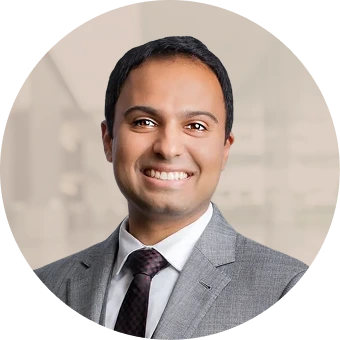
Viraj J. Mehta, MD, MBA
