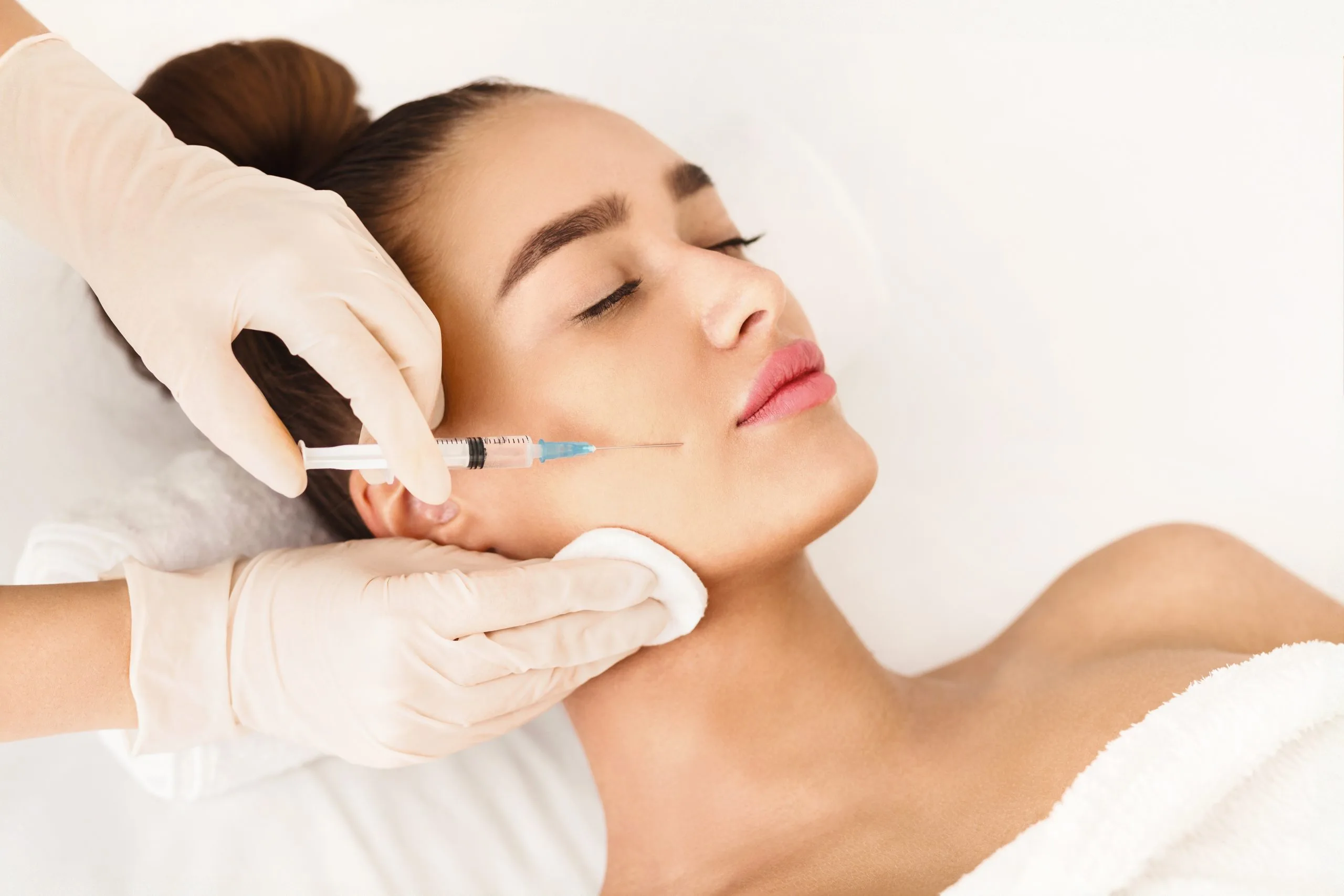
A liquid facelift is performed with both Botox and dermal fillers. These two injectables are combined to restore facial volume and relax wrinkle-causing muscles, offering a non-surgical lift and rejuvenation. Both treatments are typically used together to achieve the most natural and comprehensive results.
A liquid facelift is an advanced, non-surgical plan that uses injectable filler gels and neuromodulator solutions to lift, contour, and rejuvenate the face. It is not a surgical lift, does not involve incisions, and does not remove extra skin.
A liquid facelift rebuilds support with dermal fillers and calms overactive muscles with neuromodulators, aiming for facial harmony rather than a “pulled” look. It addresses multiple cosmetic concerns:
Volume loss
Skin quality
Dynamic wrinkles
This procedure will not copy a surgical facelift, which repositions tissue. However, it can improve midface volume, soften shadows, and refresh the eyes and mouth with little downtime.
Our team treats the face as a whole. Volume in the cheek can change the fold beside the nose; a small change at the temple can change how the brow sits.
A lifted look does not come from pulling skin. It comes from putting support back where it belongs and reducing the downward pull of certain muscles.
Think of the face as a tent. If the poles shorten, the fabric sags. Fillers act like stronger poles. Neuromodulators ease the ropes that yank downward. When both are in balance, the face can look higher and brighter without a “pulled” appearance.
Fillers are the foundation of the liquid facelift. We use our deep understanding of facial anatomy to place fillers in precise locations and rebuild the face’s underlying support system.
Cheeks are often the starting point. Adding volume to the mid-cheek can create a subtle lift that restores youthful cheekbones, softens nasolabial folds, and reduces the appearance of jowls – even before that fold is treated directly.
Hollowed temples can make the upper face look narrow, and the brow look heavier; restoring temple volume can change that frame.
Filler along the jawline can camouflage early sagging and create a crisper, more defined profile.
Chin filler can affect how the neck and lower face read in profile.
Treating tear troughs can instantly make you look more rested and vibrant.
Once foundational volume and lift are re-established with fillers, neuromodulators refine the results. Botox does not inflate a wrinkle. It lets the skin rest so crow’s feet, forehead lines, and glabellar frown lines do not detract from newly restored contours.
Used with fillers, Botox can also enhance longevity. Relaxing the muscles around the mouth means less movement to break down filler in the nasolabial folds. A stiller muscle means a calmer canvas – not a frozen forehead. Dosing and placement should protect a natural expression.
Some patients only need neuromodulators – they have visible expression lines but good volume.
Others have volume loss with minimal expression lines.
Most people who want a liquid facelift have a mix of both, which is why the two products are so often paired.
Use Botox (or another neuromodulator) when:
Wrinkles are caused by muscle movement, typically in the upper third of the face
Lines appear with expression and fade at rest, or remain as etched lines from years of motion
Lines appear on your forehead when you raise your eyebrows
Crow’s feet form when you smile or squint
You want a subtle brow elevation from muscle rebalancing
Use fillers when:
Concerns relate to volume loss, sagging, or static lines
Cheeks have lost youthful projection or look flat
Hollows or dark circles under the eyes make the face look tired – even when you feel rested
Shadows have formed beside the nose or at the corners of the mouth
Smile lines are visible even when your face is at rest
Temples or the jawline have lost definition
During your consultation, our team analyzes your facial structure, skin quality, and muscle pattern. He looks at how the eyelids, brows, cheeks, and jaw work together – not at a single wrinkle in a photo.
Bring up the expression that bothers you most – frowning, squinting, or a tired look at rest. That detail often clarifies whether muscle movement, volume, or both should be considered in the plan.
Combining these two types of injectables provides a result that neither could achieve alone:
Comprehensive rejuvenation: Fillers rebuild facial structure from within; Botox smooths the surface.
More natural, even results: Treating only one aspect of aging can look unbalanced – for example, plumping the cheeks without addressing deep-set crow’s feet.
Enhanced longevity: Relaxing muscles with Botox can reduce stress on fillers in the same area.
Customized treatment: Both products allow a highly personalized plan that supports natural facial balance, a core aim at The Oculofacial Center.
Skin texture is a separate layer. Complementary chemical peels may be discussed for surface quality, but peels do not lift the face. Lift comes from structure and muscle control.
Injectables also have limits. They cannot remove extra eyelid skin. If hooded lids or lower-lid bags are driven by skin and fat, upper blepharoplasty or lower blepharoplasty may be the more accurate option. An honest plan names what filler and Botox can change—and what they cannot.
The liquid facelift at The Oculofacial Center begins with an in-depth consultation with our team, who listens to your goals and evaluates facial anatomy, skin quality, volume loss, folds, and the dynamics of your expressions.
Based on this analysis, our specialist creates a customized treatment map detailing which products will be used and where they will be placed. Our specialized expertise in the intricate structures of the face – including the eyelids, orbits, and face – helps keep injections safe, precise, and natural-looking.
The process is typically completed in a single office visit and is often described as a lunchtime procedure: brief, with no surgical recovery.
Follow-up matters. Neuromodulators take several days to peak. Filler contour becomes clearer as swelling fades. A thoughtful plan allows time to judge the result in everyday light, not only immediately after treatment.
A liquid facelift is not an either-or treatment – it often combines both Botox and dermal fillers to address the different ways the face changes with age. Fillers restore lost volume and structural support, while Botox relaxes targeted muscles to soften dynamic wrinkles and refine the overall result. When carefully customized to your facial anatomy and goals, this combination can create a refreshed, balanced appearance without surgery or significant downtime. A consultation with an experienced facial specialist can help determine whether Botox, fillers, or both are the right approach for you.

About the Author
Viraj J. Mehta, MD, MBA
