Dr. Viraj Mehta, a fellowship-trained oculofacial plastic surgeon, repairs droopy upper eyelids (ptosis) for Washington, DC patients at The Oculofacial Center on Rockville Pike in North Bethesda. When a low lid blocks your vision, insurance often covers the surgery, and the office is about 30 minutes from downtown by car or on the Metro Red Line.
These are Dr. Mehta’s own ptosis repair patients, photographed before surgery and after healing. More eyelid, brow and orbital cases are in our before and after gallery.
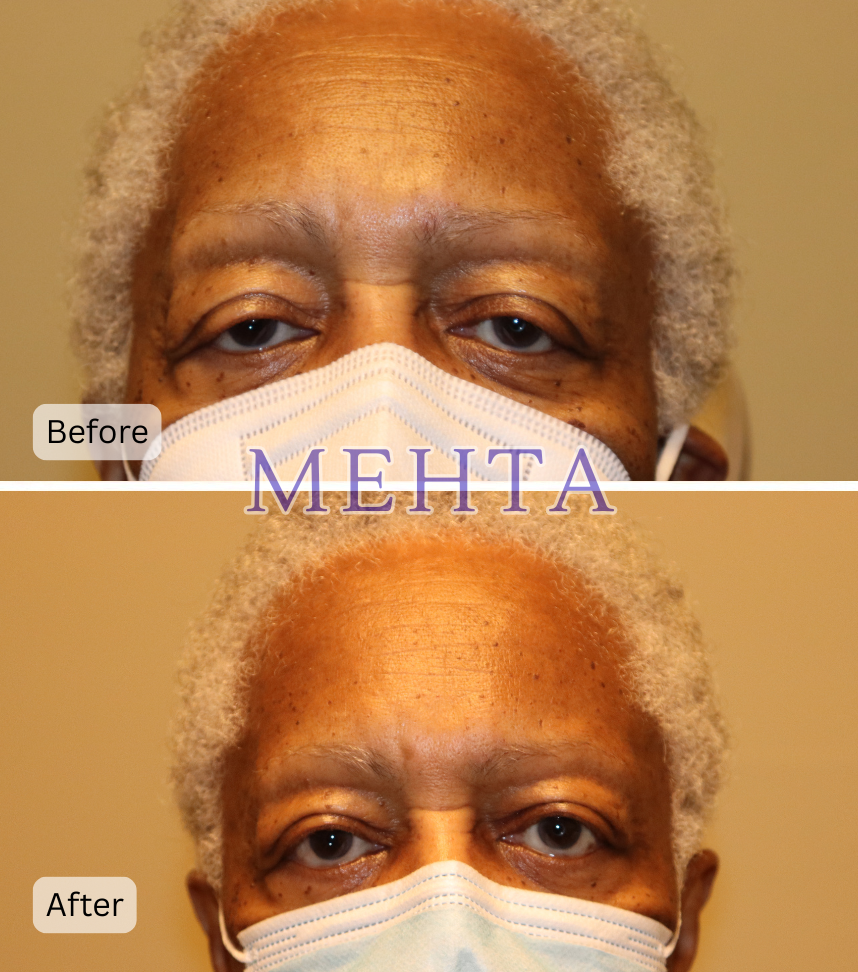
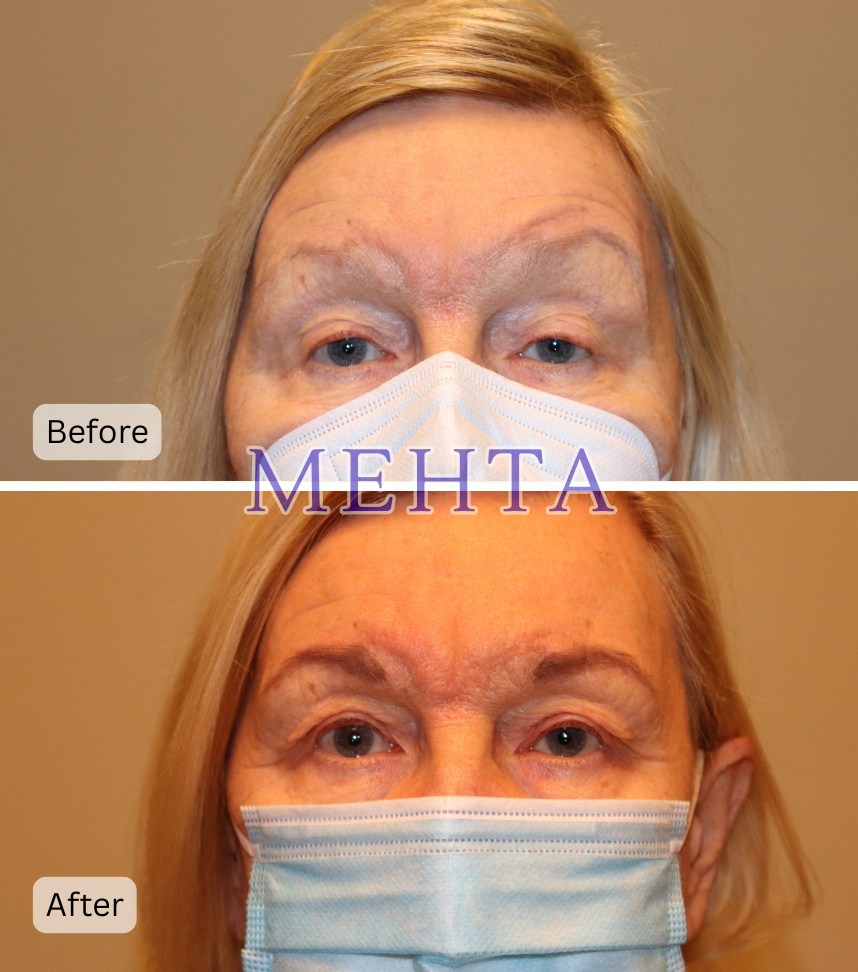
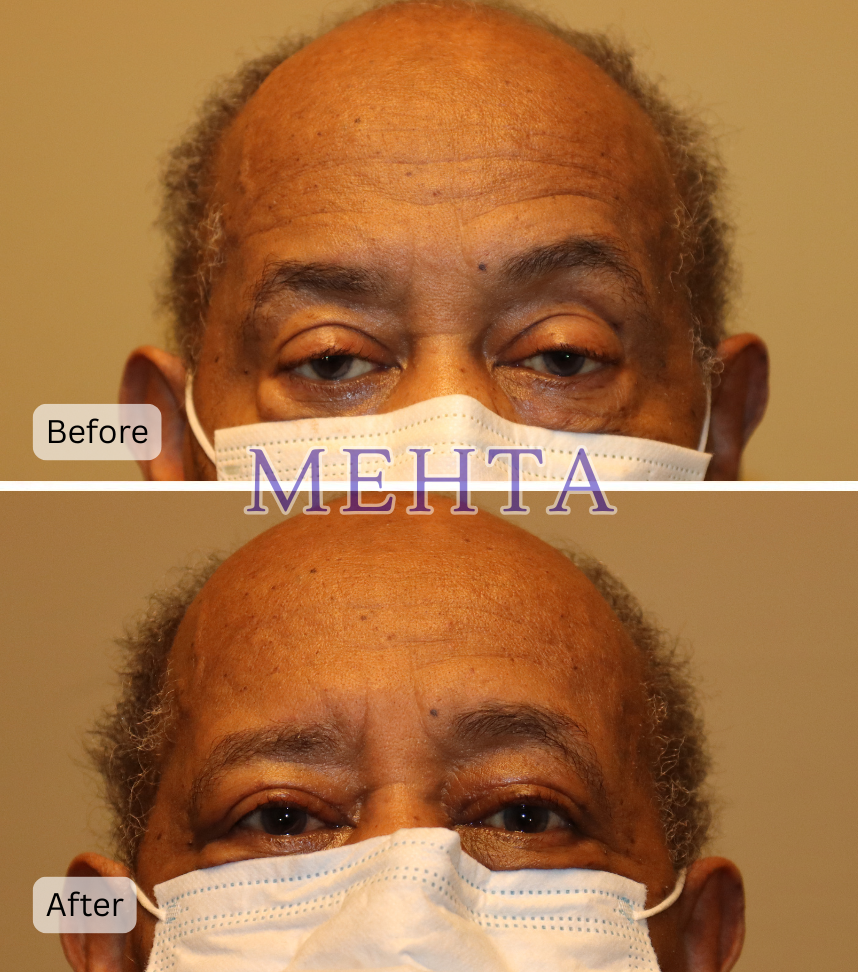
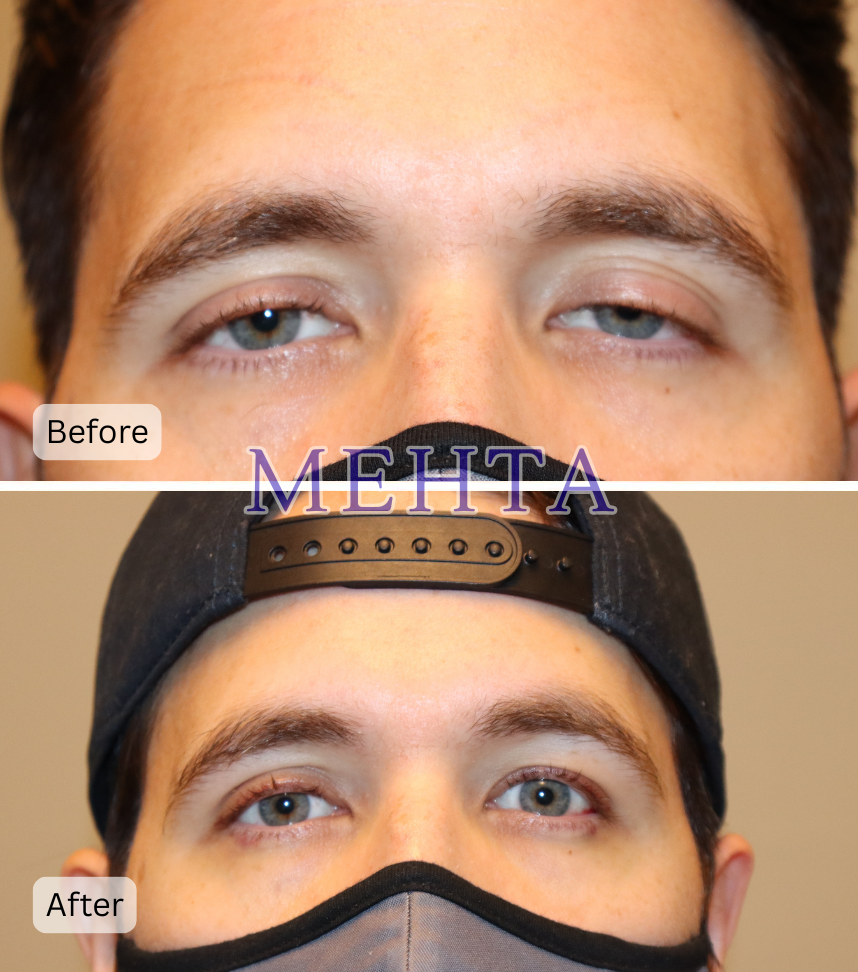

Ptosis is a drooping of the upper eyelid itself, not just extra skin above it. It usually happens when the muscle that lifts the lid, the levator, stretches or loosens with age, long contact lens wear or past eye surgery. The lid sits lower over the pupil, the field of vision narrows at the top, and many people raise their brows all day to see, which leads to a tired, strained look and forehead fatigue.
Ptosis repair tightens or reattaches that muscle so the lid rests at a natural height again. Patients come to us from across the District, from Capitol Hill and Navy Yard to Georgetown, Cleveland Park and Tenleytown. If heavy skin is also part of the problem, read about blepharoplasty in Washington, DC. Our main ptosis repair page covers the procedure in more depth.

Many DC patients start with a virtual consultation to talk through what they notice and whether it is ptosis, extra skin or both. Before surgery you see Dr. Mehta in the office. He measures how high each lid sits and how well the lifting muscle works, which decides how the repair is done. When the lid affects your vision, he records it with photos and a visual field test, the documentation insurance plans usually ask for before approving surgery.
You leave with written instructions for the weeks before surgery, including which medications and supplements to pause. Traveling from farther away? Our out of town patients page explains how we keep in-office visits to a minimum.
The cost of ptosis repair in Washington, DC averages $3,400 to $8,500 when paid out of pocket. RealSelf patient reviews put the average near $3,400, with more involved cases reaching about $8,500. Typical ranges by type:
When a drooping lid blocks your vision and the visual field test shows it, insurance often covers ptosis repair as a medical procedure. We accept all major insurance plans, and you can check your coverage online. Self-pay patients can use monthly plans through CareCredit, Cherry and Sunbit.
The Oculofacial Center is at 11119 Rockville Pike, Suite 404, North Bethesda, MD 20852, about 12 miles from downtown DC.

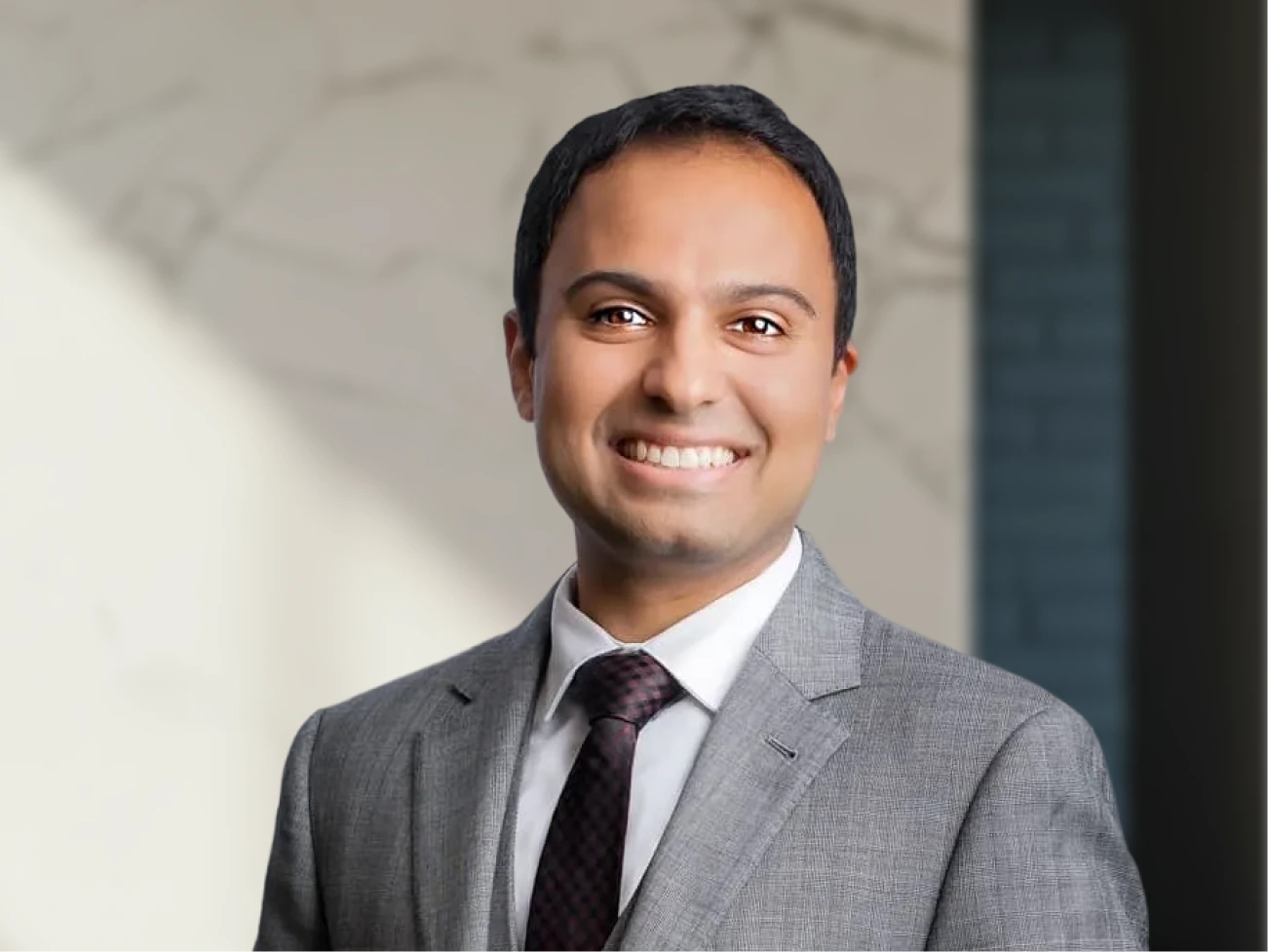
Dr. Viraj Mehta is a fellowship-trained oculofacial plastic surgeon whose practice is limited to the eyelids, face and orbits. He trained at Cornell, Case Western Reserve, Memorial Sloan Kettering, Vanderbilt Eye Institute and Mayo Clinic. Ptosis repair is measured in millimeters, and matching two lids takes both a surgeon who treats eyelids every day and the patient’s help on the table, which is why he checks the height with your eyes open before closing.
For DC patients the logistics stay simple: often a video consultation first, one office visit for measurements and testing, and short follow-ups near the Red Line. Meet Dr. Mehta.
Yes. Patients come to our North Bethesda office from every part of the District. The office is about 12 miles from downtown, about 30 minutes by car or on the Metro Red Line to North Bethesda station.
Ptosis repair in Washington, DC averages $3,400 to $8,500 when paid out of pocket. One eye costs less than both, and adding upper blepharoplasty raises the total.
Often, yes, when the drooping lid blocks your vision and a visual field test documents it. We accept all major insurance plans and handle the documentation your plan asks for.
Ptosis means the lid itself sits too low because the lifting muscle has loosened. Extra skin above the lid is treated with blepharoplasty. Many patients have both, and Dr. Mehta checks for each at the consultation.
Most people return to desk work within about a week. Avoid heavy lifting and hard exercise for one to two weeks, and expect mild swelling and bruising for a week or two.

Let’s create a custom plan to achieve your best look