
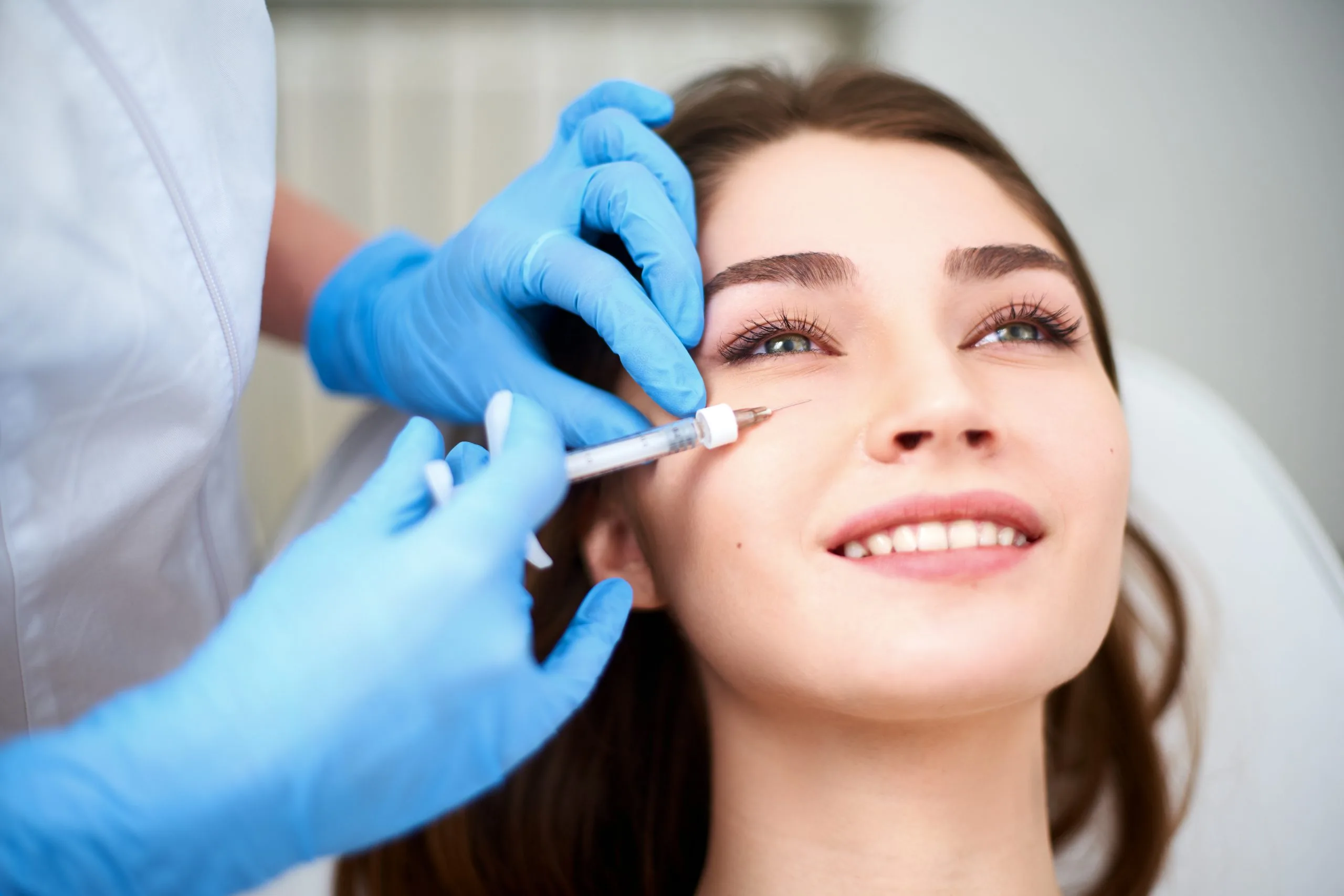
If you catch your reflection and see dark, sunken shadows under your eyes, you’re not alone. Those hollows can make you look tired even after eight hours of sleep, and concealer only goes so far. Hyaluronic acid (HA) fillers are the best option for most people. Specifically, we use soft, smooth gels designed for delicate areas that can be adjusted or dissolved if needed. Placed carefully, they soften the hollow, blend the eyelid into the cheek, and give you a rested look without changing who you are. The product matters, but the technique and the person holding the syringe matter just as much.
Here’s how we think about choosing the right filler, who is a good fit, and what to expect.
Hollows are rarely just about your skin. Several things happen together, and knowing which ones apply to you helps us choose the right treatment.
Volume loss in the cheek: As the cheek fat pad slips or thins, it no longer supports the tissue under the eye.
Bone changes: The bony rim around the eye slowly changes shape with age, which deepens the groove.
Thin skin: The skin here is so delicate that shadows and blood vessels show through easily.
Genetics: Some people have hollows in their twenties.
Weight loss and sleep loss: Both can make an existing hollow look worse.
Hyaluronic acid is a sugar molecule your body already makes. It holds water, adds gentle volume, and breaks down slowly over time. It’s also reversible. If a result isn’t right, an enzyme called hyaluronidase can dissolve the filler. That safety net is a big reason we rely on HA for the eye area. You can read more about our approach to dermal fillers in general.
Not every HA filler suits the under-eye area, though. Some are thick and designed to sculpt a jawline or build cheekbones. Under the eye, that same firmness can look lumpy or bulky.
We look for products with these qualities:
Soft and flexible: It should move naturally when you smile or blink.
Low swelling: Some gels attract more water than others, and under-eye skin shows every bit of puffiness.
Smooth spreading: Even gels blend more easily and are less likely to form bumps.
Track record: A few HA products have been studied and FDA-cleared specifically for under-eye hollows, and others are used successfully by experienced injectors.
The best product for you depends on how deep your hollow is, how thick your skin is, and how much support your cheek gives. That’s why we choose after an exam, not before.
Thick, firm HA fillers: These are better suited to the cheek or chin.
Non-HA fillers: Products that can’t be dissolved leave no room to fix a problem.
Permanent fillers: In an area this delicate, permanent isn’t worth the risk.
“Most people ask me which brand is best. What I’d rather talk about is your anatomy. Two people can have the same-looking hollow for completely different reasons, and the same syringe would give them very different results.” – Dr. Viraj Mehta
Filler works best for people with mild to moderate hollows and smooth, fairly healthy skin. You’re likely a good fit if:
You notice a groove running from the inner corner of the eye toward the cheek.
Your under-eye area looks flat or shadowed rather than puffy.
You want no surgery and very little downtime.
You’re in good general health and have realistic expectations.
Filler isn’t right for everyone. If you have noticeable bulging fat pads, a lot of loose skin, or deep bags, adding volume can make things look heavier. In those cases, a lower blepharoplasty may give you a better, longer-lasting result because it repositions or removes the fat that’s causing the shadow. Some patients benefit from a combination of both.
“The biggest mistake I see is treating a hollow that’s actually a bag. If you fill a bulge, you make it bigger. Half of what I do in a consultation is figuring out whether you need to add something, take something away, or leave it alone.” – Dr. Viraj Mehta
The visit is quicker than most people expect. We clean the skin, apply numbing cream if you’d like, and place small amounts of filler with a very fine needle or a blunt-tipped cannula. We build the result slowly, checking symmetry as we go. Most treatments take about 30 minutes.
Most people describe pressure more than pain. You’ll see a difference right away, though swelling can hide the final look for a few days.
Expect some mild swelling or bruising. Cold compresses, sleeping with your head slightly raised, and skipping heavy workouts and alcohol for the first day can help. Your final result usually settles within one to two weeks.
Filler in this area often lasts somewhere between 6 and 18 months, depending on the product and how quickly your body breaks it down. Some patients come back once a year for a small touch-up.
Common side effects are small and short-lived, including bruising, swelling, and tenderness. Less common problems include lumps, a bluish tint if the filler sits too close to the surface, and lingering puffiness. Rarely, filler can block a blood vessel, and when that happens near the eye, it’s a true emergency. That’s why your injector’s training and anatomical knowledge deserve as much thought as the brand of filler.
“I spend my days operating around the eye, so I know what’s under the skin, where the vessels run, and how the tissue behaves. Filler is simple in theory. It’s the map in your head that keeps it safe.” – Dr. Viraj Mehta
Choose a provider who will:
Examine your whole face, not just the under-eye area.
Explain the risks openly.
Have a plan in place if something goes wrong.
Be willing to tell you “not yet” or “not this treatment.”
Under-eye hollows have some surprising quirks:
Your dark circles might not be dark at all. Many are simply shadows. Hold a small light just below your eye. If the color fades, the culprit is a hollow, not pigment.
The skin here is paper-thin. Eyelid skin is one of the thinnest on the body, at about half a millimeter. That’s why blood vessels show through and why gentle technique matters so much.
Your eye sockets change shape as you age. The bony openings around the eyes gradually get larger over the decades, which is one reason hollows can appear even in people who take great care of their skin.
Bathroom lighting is not your friend. Bright overhead lights cast shadows into the hollow, making it look worse than it does in soft daylight.
HA loves water. That’s part of what gives filler its soft look, and it’s also why a salty dinner can make the area look puffier the next morning.
Filler restores volume, but it doesn’t fix everything. If your skin is crepey or uneven, adding texture and tone treatments can improve the overall appearance of the area. Depending on your goals, we may discuss chemical peels, laser skin resurfacing, or radiofrequency to firm and refine your skin. Filler is often one piece of a bigger plan, and it works best when the plan is tailored to you.
“The patients who are happiest aren’t the ones who look ‘done.’ They’re the ones whose friends say, ‘You look great, did you take a vacation?’ That’s the standard I aim for every time.” – Dr. Viraj Mehta
The best under-eye filler is the one chosen for your anatomy, placed with skill, and backed by an honest conversation. If you’d like to see what’s possible, browse our before-and-after gallery, learn more about Dr. Mehta’s training and background, and then schedule a consultation at our Bethesda office. You can also call us at (301) 265-5385. We’ll examine your eyes and cheeks, talk through your goals, and tell you plainly whether filler, surgery, or a combination makes the most sense.
Disclaimer: This blog post is for general educational purposes only and is not medical advice. Results vary from person to person, and every treatment carries risks. Only a qualified provider can determine whether a treatment is right for you after an in-person evaluation. If you experience severe pain, vision changes, or skin discoloration after any injectable treatment, seek emergency medical care right away.

About the Author
Viraj J. Mehta, MD, MBA
