When the eyelids look heavy or sit lower than usual, people often describe them as “droopy.” While this is a common descriptive term, it isn’t a medical diagnosis. Ptosis is a specific condition in which the eyelid margin sits too low, often because the levator muscle is weak or has become detached. A droopy-looking eyelid, however, can also be caused by excess skin, a low brow, or naturally hooded eyelids. Understanding what’s causing the drooping is the first step toward choosing the right treatment.
“Droopy eyelid” is a general, non-medical term for a heavy, tired, smaller, uneven, or partially closed upper eyelid. It is a look and a symptom, not a diagnosis – even though many people use it interchangeably with ptosis.
The lid margin – the edge where the lashes grow – is the key:
If that edge has dropped, the problem may be ptosis.
If the edge is in a normal place but skin hangs over it, the problem may be extra tissue or a hooded shape.
Both can appear together.
Aging is a frequent cause: skin thins and stretches, the brow can settle, and the muscle that lifts the lid can loosen. Injury, prior eyelid surgery, nerve problems, and some muscle or thyroid conditions can also change lid height or shape.
Common symptoms:
A tired, sleepy, or heavy feeling in the lids
Asymmetrical eyelids, with one drooping more than the other, or a lid that covers the pupil
Difficulty applying eye makeup
Trouble keeping the eyes open late in the day
Raising the eyebrows or tilting the head back to see clearly
A smaller field of vision, especially overhead, peripheral, or upper vision
A sudden droop, double vision, or other new neurologic signs should be checked promptly. Slow change over the years is more often related to aging or long-standing anatomy.
Ptosis (pronounced “TOE-sis”), also known as blepharoptosis, means the upper eyelid margin sits too low. The primary muscle that lifts the lid is stretched, weakened, detached, or not doing its job well enough.
Even a few millimeters can cover part of the pupil, block light, and make the face look sleepy on one side.
A person can have ptosis with little extra skin, extra skin with no ptosis, or both at once. When the muscle cannot open the lid fully, the eyelid margin (where the lashes grow) droops and may cover part of the pupil.
People with ptosis often describe a lid that will not stay up. Makeup may smear on the lashes, and the fold of skin can look uneven because the crease has changed. Some patients are told they look angry or exhausted when they feel fine.
Vision symptoms are easy to miss at first. Overhead signs, a computer screen, or night driving may become harder. Many people do not realize how much they use their forehead until someone asks them to relax their brows – then the lid drops further.
Unique signs related to muscle function include:
The upper eyelid margin rests lower than normal, potentially covering the pupil
A noticeable decrease in the upper field of vision
Chronic eyebrow lifting (using the forehead muscles) to help raise the eyelid
Tilting the chin upward to see from underneath the drooping lid
Noticeable asymmetry between the two eyelids
The cause of ptosis is directly related to the function of the levator muscle or its nerve supply:
Aging: The most frequent cause, as the levator tendon naturally stretches over decades
Congenital factors: The muscle fails to develop properly in the womb
Injury or trauma: An accident that damages the eyelid muscle or the nerves controlling it
Eye or eyelid surgery: Procedures like cataract surgery can sometimes stretch the levator tendon
Contact-lens friction over many years
Neurological conditions and muscle disorders: Diseases that affect nerve or muscle function throughout the body
Swelling, tumors, and thyroid eye disease that change the lid position
Dr. Viraj Mehta looks at the whole oculofacial area so that a lid problem is not treated in isolation from the brow, orbit, or tear system.
Dermatochalasis is the medical term for excess, loose, stretched, and redundant skin on the upper or lower eyelids. It is extremely common and a natural part of aging, as skin loses elasticity.
The lid margin may still sit at a normal height, but a fold of skin hangs over the lashes like a curtain. The crease can disappear, and skin may rest on the lashes, making the eyes feel heavy, hooded, or even obstructing vision.
This is a skin and tissue problem, not a weak lifting muscle. That is why upper blepharoplasty – which removes extra skin – is often the matching procedure, while ptosis repair addresses the muscle and tendon.
The core difference is anatomical. Treating only the skin when the muscle is weak leaves the lid low. Tightening only the muscle when the skin is redundant can leave a heavy fold.
An easy way to visualize it:
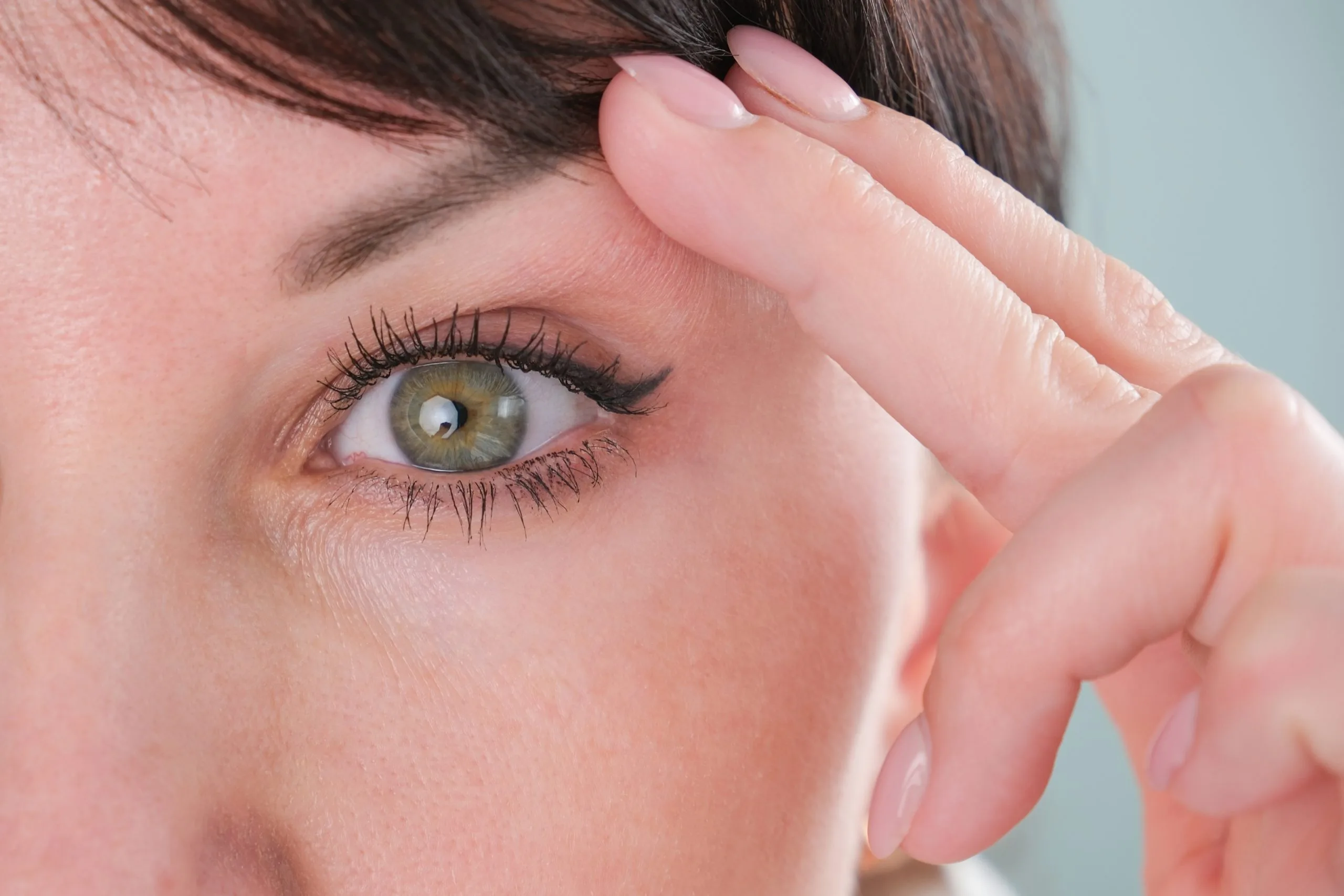
Gently lift the loose skin on your eyelid with your finger.
If the eyelid edge underneath is in a normal, open position, the issue is likely excess skin (dermatochalasis).
If the eyelid edge itself remains low even when the skin is held up, it points toward ptosis.
A precise diagnosis is essential because the treatment for ptosis is completely different from the treatment for excess skin. At The Oculofacial Center, Dr. Viraj Mehta performs a comprehensive evaluation to identify the exact cause of a droopy appearance.
This evaluation includes:
Visual examination: Assessing overall facial anatomy, eyelid position, skin quality, and brow position
Marginal Reflex Distance (MRD): Measuring the distance from the center of your pupil to the edge of your upper eyelid to quantify the degree of ptosis
Levator function test: Measuring the total distance the eyelid travels from full downward gaze to full upward gaze to assess the strength of the eyelid-lifting muscle
Visual field testing: A formal test to determine if the eyelid or excess skin is blocking your peripheral vision
Checks of brow height, extra skin, symmetry, eye surface health, and whether the pupil or eye movements are affected
Looking up, looking down, and relaxing the forehead to show whether the brow is secretly holding the lid up
Old photographs to confirm when the change began
The goal is to distinguish muscle weakness from skin excess, brow descent, and eyelid malposition.
An expert evaluation will provide a definitive diagnosis and a clear path forward. Consider a consultation if you experience:
A noticeable change in eyelid height, especially if it happens suddenly
Vision obstruction that interferes with daily activities like reading or driving
A tired look that does not go away with rest
Headaches or eye strain from trying to keep your eyes open
Seek care sooner if the droop is new, one-sided, painful, or paired with double vision, a pupil change, or weakness in the face. Children with a droopy lid need timely evaluation so vision development is protected.
A consultation at The Oculofacial Center in Bethesda, MD, is essential if you want a clear diagnosis before choosing eyelid surgery or a non-surgical plan.
The right treatment depends entirely on the correct diagnosis. A procedure designed to fix excess skin will not correct a weak muscle, and vice versa.
Because ptosis is a muscle problem, treatment involves surgically tightening or reattaching the levator muscle or tendon. This procedure is known as ptosis repair.
The plan depends on how well the muscle still works, whether one or both sides are involved, and whether extra skin is present. The goal is to restore the muscle’s proper function so it can lift the eyelid to a normal, healthy position.
If the issue is excess skin (dermatochalasis), the standard treatment is an upper blepharoplasty. During this procedure, the surgeon carefully removes the redundant skin, fat, and sometimes a small strip of muscle to create a smoother, more defined eyelid contour.
If a low brow is contributing to the hooded appearance, a brow lift or forehead lift may be the most appropriate procedure. This surgery elevates the forehead and brows, which in turn lifts the tissue pressing down on the eyelids.
In many cases, a patient may benefit from a combination of procedures for a complete result. Lower-lid bags are a separate issue and may be treated with lower blepharoplasty when they add to a tired look.
Non-surgical care can help selected related concerns:
Neuromodulators may refine brow position in some patients. They do not replace ptosis repair when the levator is weak.
Fillers and chemical peels can support surrounding skin quality, but they will not lift a dropped lash line.
Some patients combine procedures in one plan so the brow, upper lid, and lower lid work together. Dr. Mehta matches the tool to the anatomy rather than offering a single operation for every droopy look.
A consultation with an oculofacial specialist like Dr. Viraj Mehta is the most important step you can take. An oculofacial exam is the safest way to settle ptosis vs droopy eyelid in your own case.
Meet Dr. Viraj Mehta at The Oculofacial Center to review measurements, photographs, and your goals. He will perform the necessary examinations, listen to your concerns, explain the anatomical cause of your droopy eyelids, and recommend a personalized treatment plan designed to address your specific needs.
Whether an eyelid looks droopy because of ptosis, excess skin, a low brow, or a combination of factors, identifying the underlying cause is essential for choosing the right treatment. Because these conditions can look similar but require different approaches, an evaluation by an oculofacial specialist can provide clarity and help protect both vision and appearance. If you are concerned about drooping eyelids or changes in eyelid position, schedule a consultation with Dr. Viraj Mehta at The Oculofacial Center to determine what is causing the change and which treatment is best suited to your anatomy and goals.

About the Author
Viraj J. Mehta, MD, MBA
